astravue

Why Mindset Trumps Process

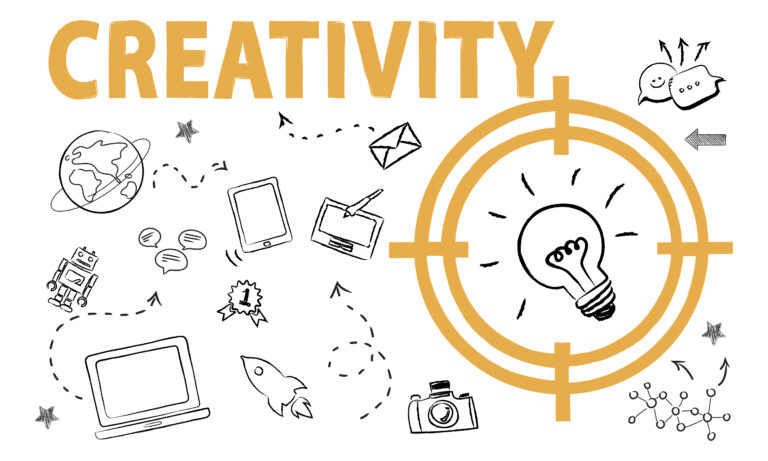
A hand-drawn doodle illustration featuring the word "CREATIVITY" in orange. The graphic shows a lightbulb inside an orange target surrounded by sketches of a globe, robot, laptop, rocket, and digital devices connected by dashed lines.

Customer experience (CX) isn’t a department; it’s a personality trait.

Most organizations treat Design Thinking like a software update—something you install via a two-day workshop and a mountain of sticky notes.

But frameworks don’t solve friction; people do. Behind every world-class customer journey isn’t just a process, but a specific cognitive profile.

If you want to move the needle on CX, you have to stop hiring for “process mastery” and start cultivating the Design Thinking Mindset.

The Invisible Wall: Why CX is a Human Problem

We often blame bad CX on “legacy systems” or “budget constraints.” In reality, customer experience failures happen because of human friction:

  • Internal Ego: Optimizing for departmental KPIs rather than customer clarity.

  • The Empathy Gap: Making assumptions instead of observing raw, unfiltered behavior.

  • Siloed Vision: Prioritizing “The Product” over “The Journey.”

To fix the experience, you must first fix how your leadership thinks.

The 5 Pillars of the Design Thinking Personality

1. Radical Empathy: Solving for the “Ego,” not just the Task

Traditional managers ask: “What did the customer buy?”

The Design Thinker asks: “What was the customer feeling when they almost gave up?”

Before Canva, graphic design was intimidating and gatekept. Canva didn’t just build a “lite” Photoshop; they used Radical Empathy to realize the user’s real pain point wasn’t a lack of tools—it was a lack of confidence. By designing for the “beginner’s ego” with a drag-and-drop interface, they turned a technical chore into a moment of empowerment.

2. Integrative Thinking: Eliminating the “Trade-Off”

Design thinkers have the unique ability to balance desirability, feasibility, and viability simultaneously.

They refuse to choose between a “secure” experience and a “seamless” one.

 Moving money across borders was historically a “black box” of hidden fees and anxiety. Wise(formerly Transferwise) used Integrative Thinking to realize that transparency was more valuable than perceived low cost. By showing the mid-market rate and exact fee upfront—even when it looked more expensive than a “zero-fee” competitor—they built a brand personality of trust that banks couldn’t replicate.

3. A Bias for Action: Experimenting Through Friction

High-growth companies replace the “Highest Paid Person’s Opinion” (HiPPO) with evidence-based experimentation.

They don’t debate CX improvements for months; they prototype them in days.

 Most education apps focus on the process of teaching grammar. Duolingo’s team used a Design Thinking Mindset to focus on the psychology of persistence. They relentlessly prototyped “gamified” features—like the famous daily streak and the persistent “Duo” mascot—optimizing for the emotion of achievement rather than just the curriculum.

4. Comfort with Ambiguity: Refining the Problem First

Customer journeys are messy and often irrational.

While traditional leaders panic in the “fuzzy front end” of a problem, design thinkers thrive there.

They have the emotional resilience to sit with a messy problem until the root cause reveals itself, rather than slapping a band-aid on a symptom.

When you redefine the problem correctly (e.g., “The user isn’t lazy; the UI is confusing”), the experience improves naturally.

5. Radical Collaboration: Breaking the Handoff

Poor CX lives in the “white space” between departments—the handoff from Sales to Success or Product to Support.

Design thinkers are naturally collaborative; they view the organization as a single ecosystem.

Customer experience improves when the entire organization owns it, ensuring that internal silos never become the customer’s problem.

The Strategic Insight for Leaders

Customer experience is a reflection of how an organization thinks. If your leadership mindset is analytical but not empathetic, or structured but not experimental, your CX will always feel mechanical.

Experience is the only sustainable differentiator left. You can copy a feature. You can undercut a price. But you cannot easily replicate an organizational culture that thinks and acts with the intuition of a design thinker.

Final Thought: Stop looking for the right tool. Start building the right team.

Keep Reading