
See the biggest culprits behind every delayed projects, and how...
November 8, 2026
A struggling project is rarely short of data. It is short of clarity. The fastest way to rescue one is to answer five plain questions before you open a single dashboard. That is also the simplest test for any project health tracking software.
A delivery leader once summed it up in a short post that stuck with us:
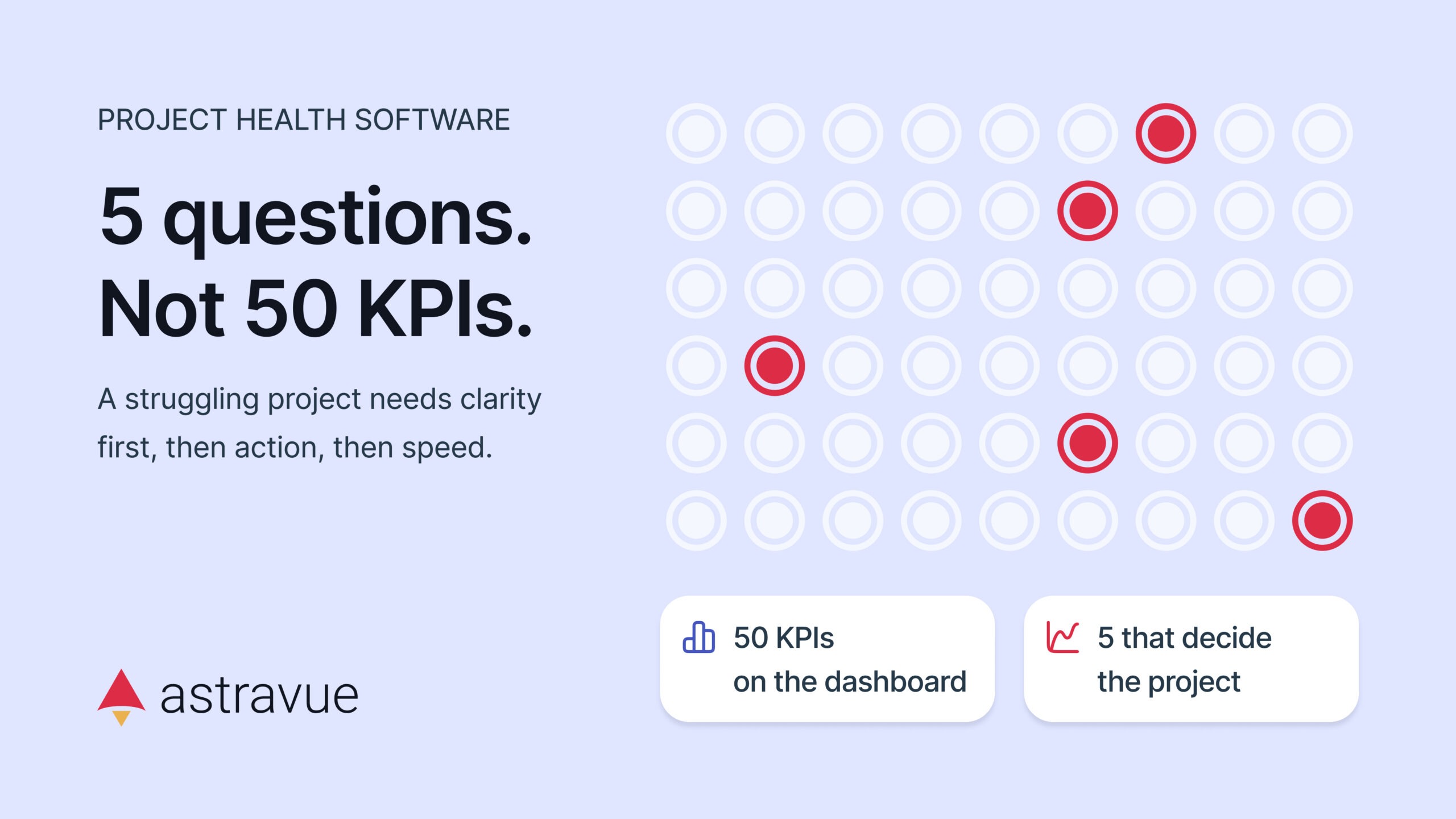
When I enter a struggling project, I don’t want 50 KPIs. I want answers to 5 questions. What exactly must we deliver? Where are we really? What is blocking delivery? Who owns each problem? Which decisions are currently stuck? Clarity first. Then action. Then speed.
This article walks through each question, the data behind it, and what good project management software should show so medium and large service teams can answer it in minutes instead of meetings.
Picture a delivery manager, let us call her Meera, who inherits a client implementation that is “slightly behind.” On day one she gets four dashboards, a 60-row RAID log, two burn-down charts and a status report that has said “Amber” for nine weeks straight.
Nobody can tell her what the client actually signed for. Three people believe they own the data migration. A design approval has been waiting on a VP for 17 days.
Meera does not need more metrics. She needs five answers.
Meera is a composite drawn from common delivery situations, not a single real client
More metrics feel like more control. In practice they bury the few signals that matter.
The problem is not a lack of numbers. It is that nobody can see the five things that decide whether the project lives or dies. Good project health tracking software puts those five things on one page.
If the team cannot state the deliverable in one or two sentences, you have a scope problem, not a delivery problem.
PMI’s Pulse of the Profession research found that 47% of unsuccessful projects miss their goals because of poor requirements management. (PMI)
A real story: HealthCare.gov. The US health insurance site broke for many users at launch in October 2013. The Government Accountability Office later found that constantly changing requirements drove cost increases, and that the site went live without confirming it met performance requirements. (GAO-14-824T, Nextgov)
Every project should open with a clear title, a plain-language description of the deliverable and a named customer. The project type (fixed fee, time and material, or retainer) should set the commercial frame from day one, and key files such as the SOW or wireframes should sit on the project itself, not in someone’s inbox.
Most troubled projects have an official status and a real one. Delivery people call it the watermelon project: green outside, red inside.
A quick example: A time and material engagement has a 200-hour cap. The team has logged 184 hours. The status says “Open” and priority says “Low.” One number tells the real story: 92% of the cap is gone.
Good PM software should keep project health (on track or at risk) separate from workflow status, so “Open” can never hide trouble. Show actual hours against the cap or budget with a live percentage used, planned versus actual dates, and for fixed-fee work, the share of contract value spent and the live margin.
A blocker stops work today. A risk might hurt you later. Mixing them is how a 60-row RAID log hides the three things that actually matter.
Back to Meera. Her team said the migration was “in progress” for a month. The real blocker took ten seconds to find: the client had never granted production database access. No KPI would have shown that. One question did.
What good software should do?
Make slipping projects impossible to miss. An at-risk flag, priority and tags should let delivery heads filter straight to the projects in trouble, and threshold alerts should fire the moment hours or spend run ahead of plan, so the team is asked “what is blocking us?” while there is still time to fix it.
A problem with three owners has no owner. Every blocker needs one named person who will chase, escalate and close the loop.
The GAO’s review of HealthCare.gov also found confusion over which officials could make contracting decisions before launch. (California Healthline) When nobody is sure who owns a call, the call does not get made.
Name one accountable owner for every project, alongside the people doing the work, client-side guests and the customer it serves. Clear roles and controlled access mean ownership is never a guessing game.
Many delivery problems are really decision problems. In a McKinsey survey of more than 1,200 managers, 61% said most of their decision-making time is used ineffectively. McKinsey estimated the waste at about 530,000 manager-days a year for a typical Fortune 500 company. (McKinsey survey, McKinsey Quarterly)
“We need your approval” is easy to ignore. “Every week this waits adds about $8,000 to cost and pushes go-live by five days” is not.
Tools should end alerts to the people who can actually decide, such as the account owner and delivery lead, with the numbers attached: hours used, cost, margin and timeline. Decision makers should get the facts at the moment a decision is needed, not three status meetings later.
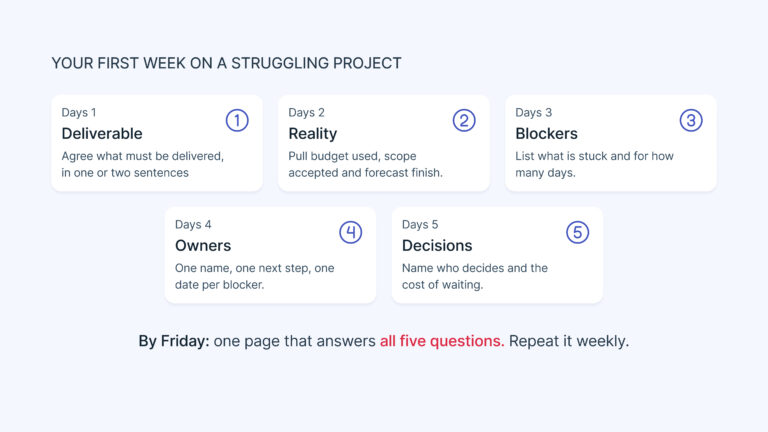
Here is a simple one-week routine for your first week on a struggling project, with your project management software doing the heavy lifting:
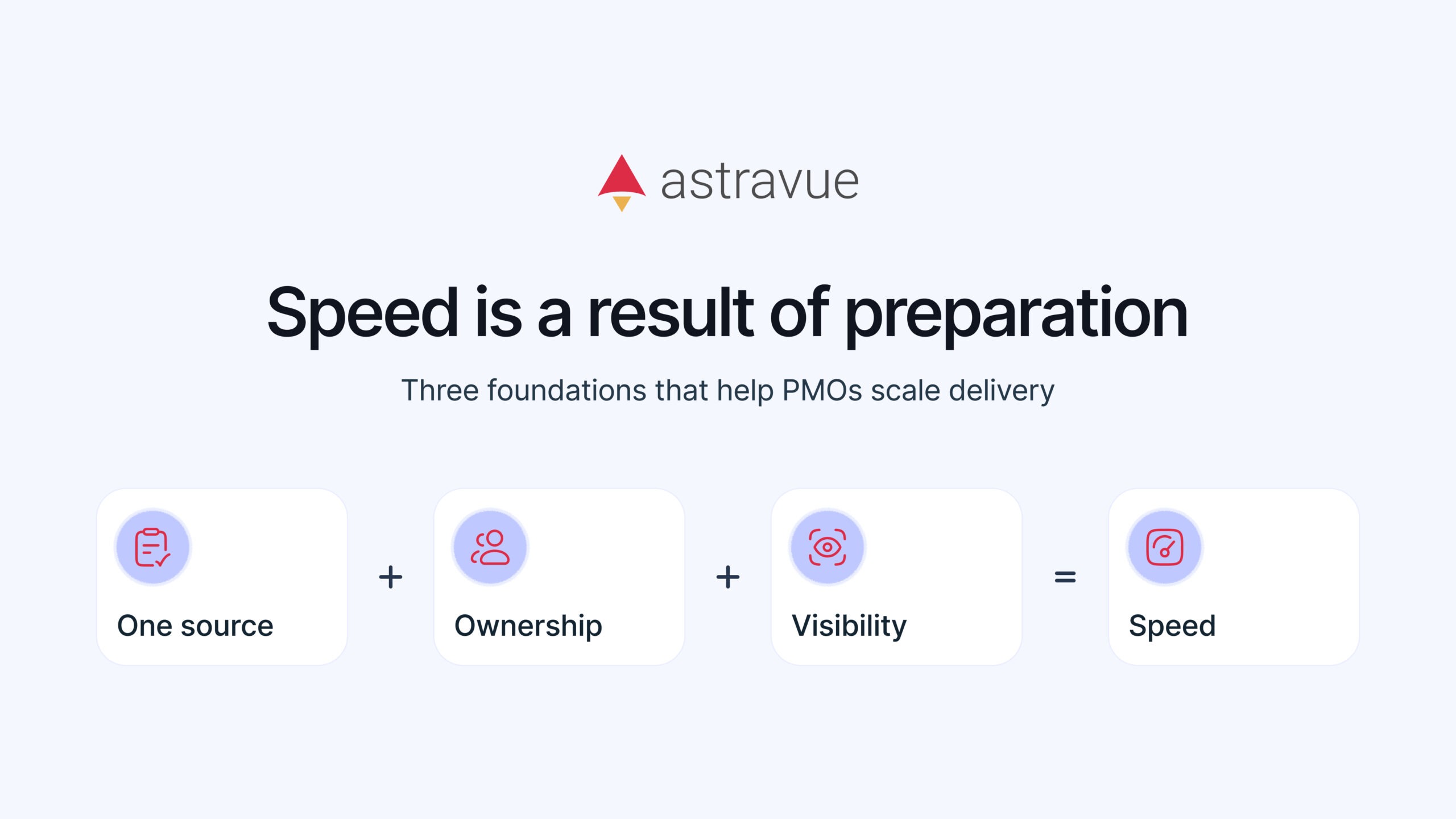
Speed is the reward for clarity. When the team knows what “done” means and sees the real gap, the pace usually picks up on its own.
Gartner predicted in 2019 that by 2030, AI would take over about 80% of today’s project management work, mainly data collection, tracking and reporting. (Gartner)
The right standard for AI in project management software is simple: it must help answer the five questions faster. AI that writes a prettier report is a feature. AI that spots a project burning its cap and tells the owner before the client does is an outcome.
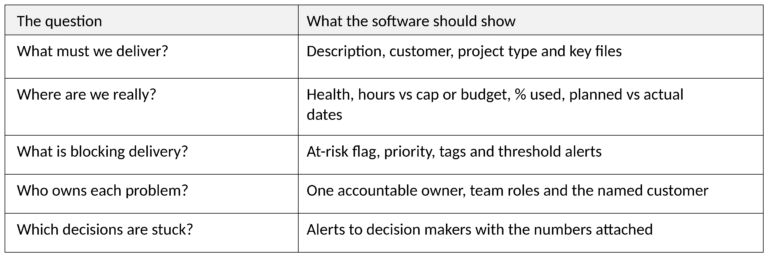
If your current tool cannot answer these five questions on one screen, it is giving you data, not clarity.
It is also the lens we used when designing project health in Astravue. Hours, cost, margin, health and ownership sit together on one project page, and alerts reach the right people before the client notices anything. If your team keeps asking these five questions and getting fifty charts back, it might be worth a look.
What is the best project health tracking software for service teams?
The best tool answers five questions on one screen: what you must deliver, where you really are, what is blocking delivery, who owns each problem and which decisions are stuck. Look for live hours, cost, margin and health on every project, plus alerts that reach the right people.
What is a watermelon project?
A project that looks green in status reports but is red underneath. It usually comes from self-reported status rather than hard numbers like budget used versus scope accepted.
What is the most common cause of project failure?
Poor requirements and unclear scope. PMI found that 47% of unsuccessful projects miss their goals because of poor requirements management.
How can project management software warn me before a project goes over budget?
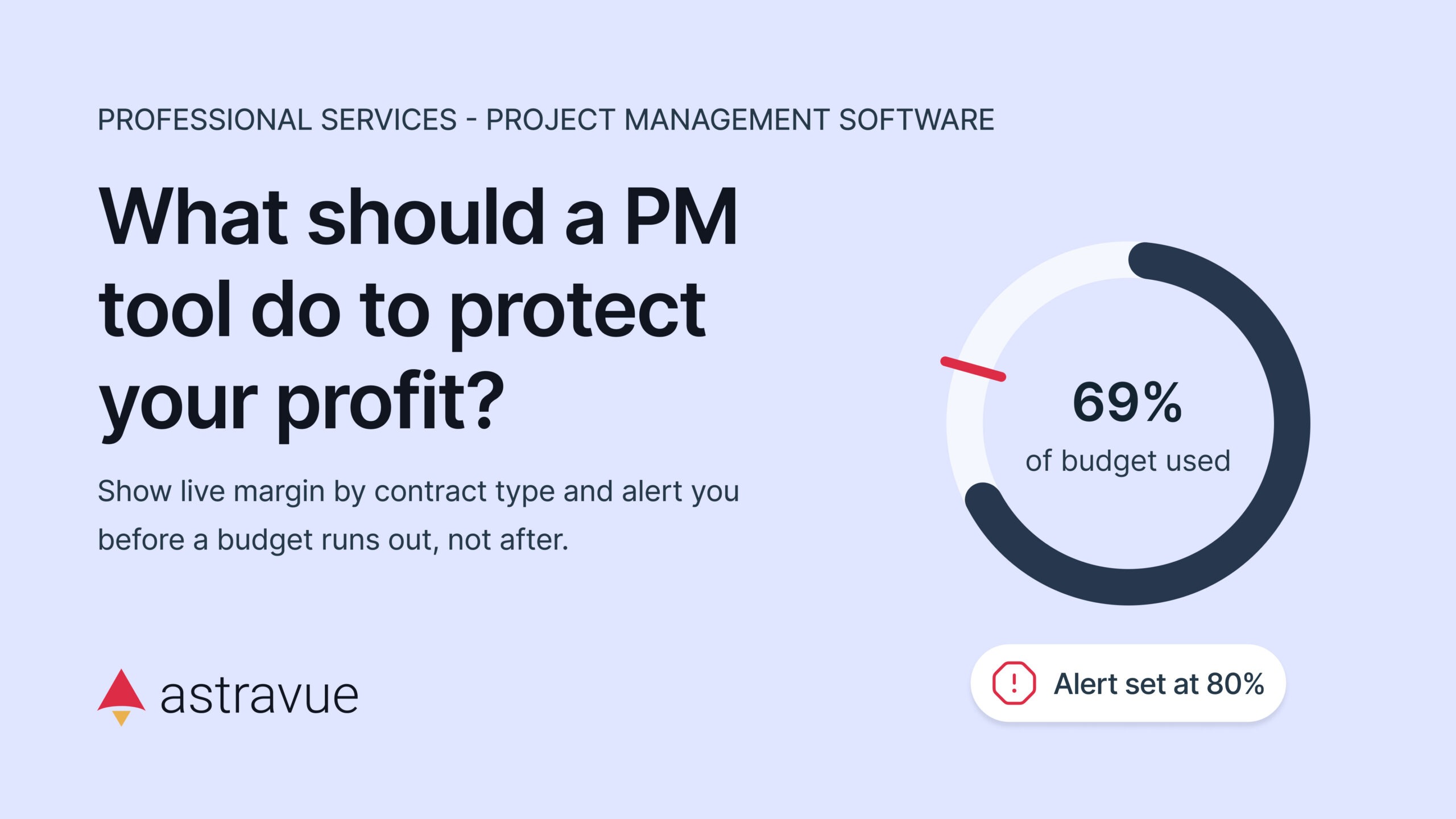
Look for configurable alert thresholds, such as 80% of the hours cap or contract value, with a choice of who gets notified. The alert should fire the moment the threshold is crossed.
See the biggest culprits behind every delayed projects, and how...
See the biggest culprits behind every delayed projects, and how...
See the biggest culprits behind every delayed projects, and how...
See the biggest culprits behind every delayed projects, and how...